Seattle, Wa — 2026-07-18
Xavier V. Nolan Releases "Family History Reunion Guide," a New Resource for Genealogy and Reunion Planning
The 177-page guide teaches adults to plan family reunions while building a documented family tree using research and DNA tools.
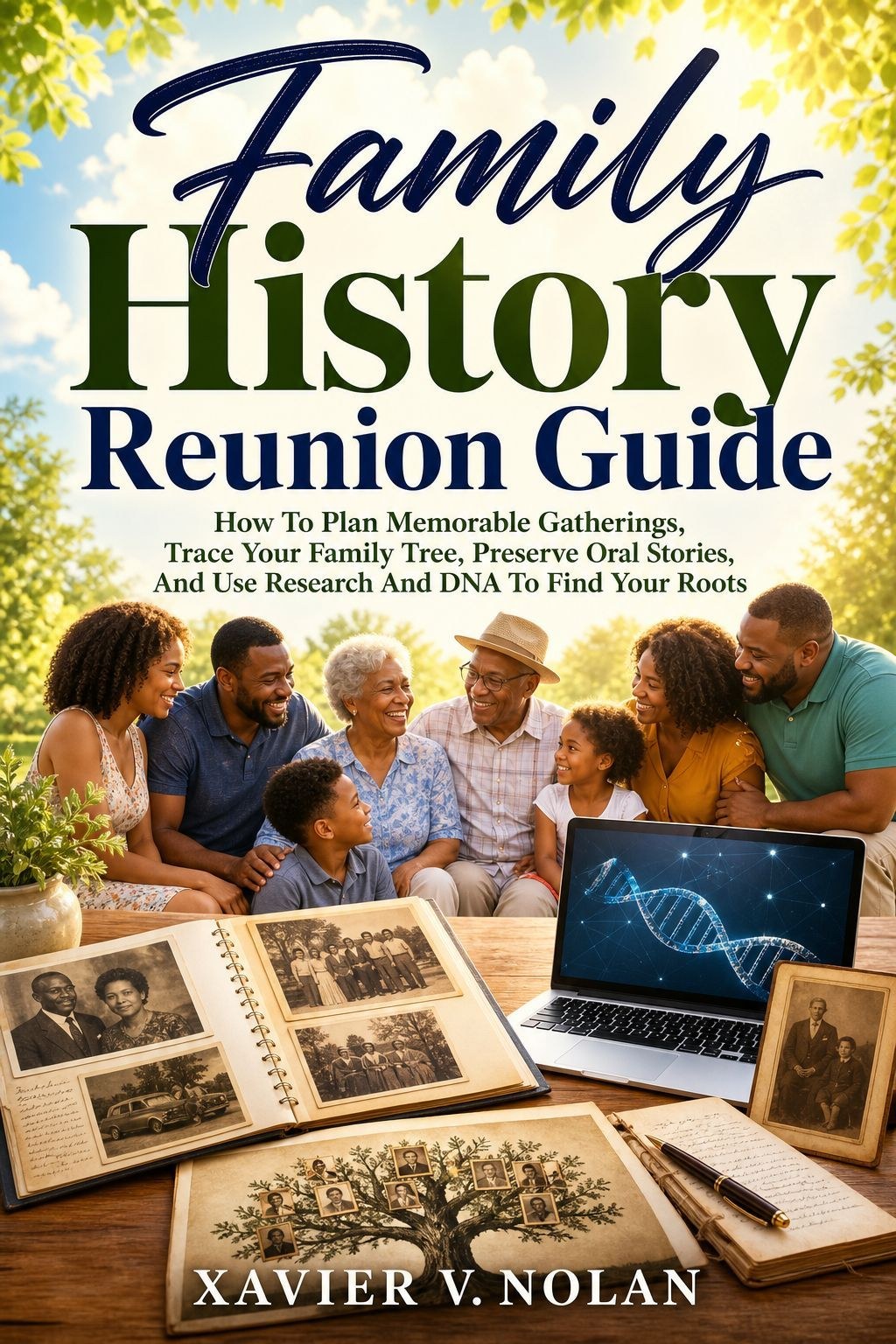
Xavier V. Nolan has released "Family History Reunion Guide: How to Plan Memorable Gatherings, Trace Your Family Tree, Preserve Oral Stories, and Use Research and DNA to Find Your Roots," a 177-page instructional book now available through https://bookstore.ebookit.com/bookstore/family-history-reunion-guide/24255e. Filed under Reference / Genealogy & Heraldry (ISBN 9781456683757), the book combines two tasks families often treat as separate: organizing a reunion and documenting family history. Nolan's guide walks readers through setting reunion goals, choosing which family branches to include, and building a research plan that turns a single gathering into a lasting record. It is aimed at adults who want their next family event to produce something more permanent than photographs.
Family reunions have historically been logistics exercises — dates, venues, potlucks — while genealogy research has been treated as a solitary hobby pursued through DNA kits, archive visits, or subscription databases. Nolan's book argues these two efforts reinforce each other: a reunion is often the only time an extended family is in one room, making it the ideal moment to collect names, dates, and stories directly from relatives before that knowledge is lost. The guide is written for adults with no prior genealogy training, addressing a gap between casual reunion-planning advice and technical genealogy manuals that assume research experience. It targets families who want to move from scattered memories and unlabeled photo boxes to an organized, verifiable record.
The book's core method starts with what a family already knows and works backward. Readers begin by mapping their own household, then extend outward through names, dates, places, and relationships supplied by relatives, building a family tree branch by branch rather than attempting to reconstruct an entire lineage at once. Chapters cover how to set reunion goals tied to research outcomes, how to identify which family lines to prioritize when time and attendance are limited, and how to structure conversations with older relatives to capture oral history efficiently during a single event.
A recurring theme is distinguishing family lore from documented history. Nolan devotes sections to helping readers preserve the stories relatives tell — even when they can't be fully verified — while flagging which details need corroboration through records, documents, or DNA testing. The book also covers practical organization: how to file paper documents, structure digital files, catalog oral history recordings, and integrate DNA test results into a family archive so findings can be cross-checked and passed down rather than left scattered across devices and shoeboxes.
Unlike genealogy database platforms or DNA testing services that focus on data collection and matching, "Family History Reunion Guide" is structured around the reunion itself as the organizing event for research. It doesn't require a subscription, software, or existing genealogy expertise. Instead, it functions as a planning workbook that treats the gathering as the mechanism for both connection and documentation, positioning the two goals as a single project rather than competing priorities for a family's limited time together.
"A reunion is the one day everyone is already in the room together — that's when the real research happens," said Xavier V. Nolan, author of Family History Reunion Guide.
The book is written for the adult relative who typically ends up organizing family gatherings and often becomes the informal keeper of family history by default. It offers concrete guidance for that role: templates for setting research priorities before a reunion, methods for interviewing relatives without turning the event into a formal sit-down, and systems for consolidating what's collected afterward. Families with aging relatives who hold undocumented memories may find particular use in the oral history sections, which address how to record stories respectfully while noting where details diverge between family members. The guide also serves adult children helping parents or grandparents organize existing documents, photos, and DNA results into something usable by future generations rather than left in storage.
"Family History Reunion Guide" is available now as an ebook for $2.99 through eBookIt at https://bookstore.ebookit.com/bookstore/family-history-reunion-guide/24255e, with EPUB and PDF formats included in the purchase. Buyers receive a secure download link by email after checkout, with a 72-hour window to retrieve files, and no public bookstore account is required. The listing includes book details, subject categorization, and available formats so readers can confirm specifications before purchase.
The release fits into Nolan's broader body of work centered on family storytelling and preservation, which emphasizes practical, accessible instruction over academic genealogy methodology. His approach treats family history as an active, shared project rather than a solitary archival task, positioning reunions, interviews, and everyday documentation as tools available to any family regardless of research experience. Future work is expected to continue this focus on making family history documentation approachable for general adult readers rather than genealogy specialists.
eBookIt is a digital bookstore and distribution platform offering direct ebook and audiobook purchases from independent authors and publishers. The "Family History Reunion Guide" listing is available at https://bookstore.ebookit.com/bookstore/family-history-reunion-guide/24255e, where readers can review the author, subject category, formats, and pricing before purchasing. Xavier V. Nolan is the author of instructional guides focused on family storytelling, reunion planning, and preserving intergenerational memory.