San Diego, CA — 2026-07-18
Willow McDonald Releases City Harvest, a Guide to Rebuilding Food Systems Through Urban Gardens
New 161-page ebook maps rooftop farms, vacant-lot gardens, and CSAs as tools for city resilience; available now for $4.99
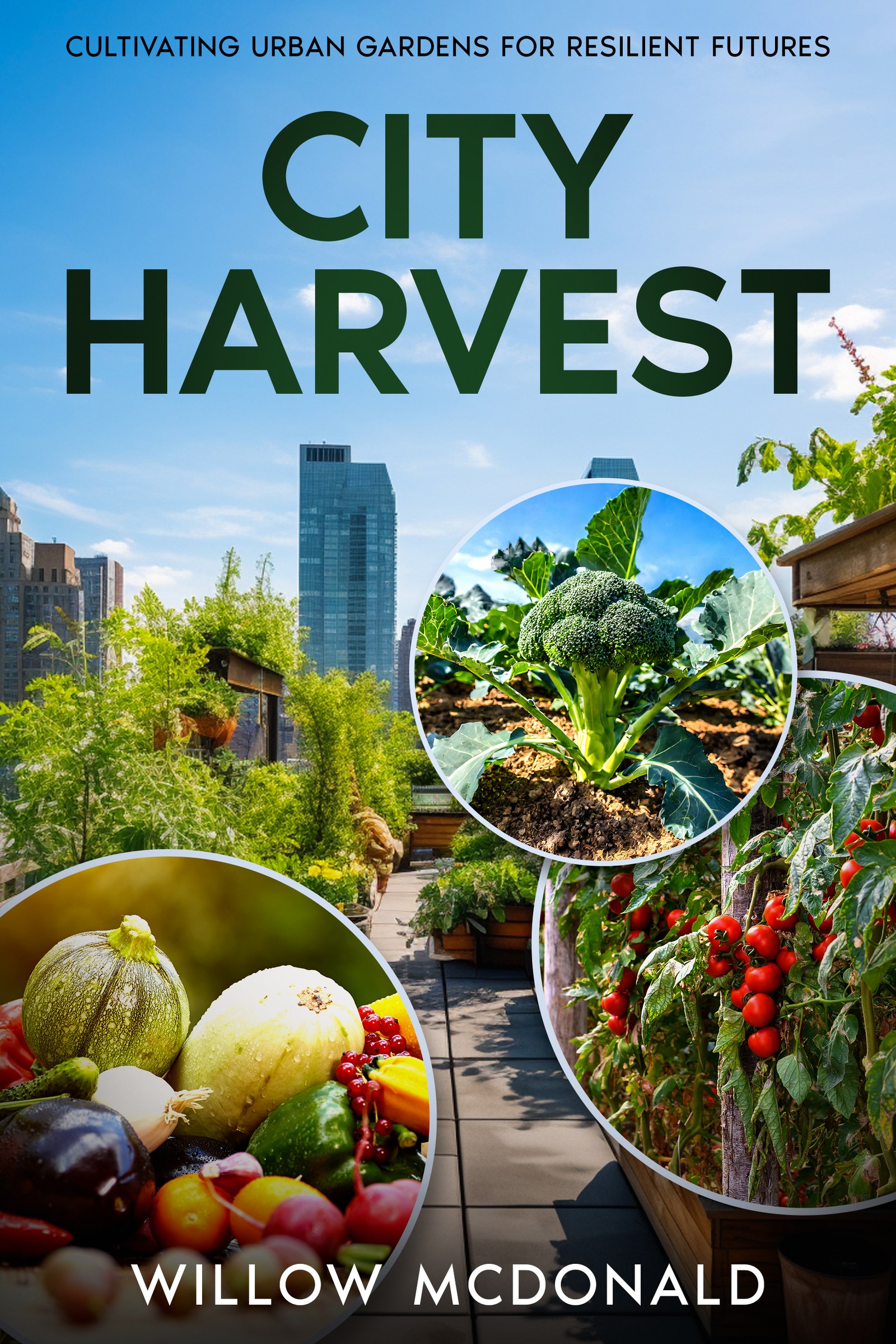
Author Willow McDonald has released City Harvest: Cultivating Urban Gardens for Resilient Futures, a 161-page ebook examining how rooftop gardens, vertical farms, and community-supported agriculture programs are changing the way cities feed their residents. The book is available now through eBookIt at https://bookstore.ebookit.com/bookstore/city-harvest-cultivating-urban-gardens-for-resilient-futures/tjazvo in EPUB, MOBI, and PDF formats for $4.99. It is written for urban dwellers, sustainability advocates, and community leaders who are looking for practical ways to expand food access in dense, built-up environments. The release lands as more cities grapple with supply chain gaps and unequal access to fresh produce, positioning City Harvest as a working guide rather than a theoretical argument.
Urban food deserts remain a persistent problem in many U.S. and global cities, where residents may live blocks from a grocery store yet have limited access to fresh, affordable produce. Vacant lots, underused rooftops, and neglected public land often sit idle in the same neighborhoods facing the greatest food insecurity. City Harvest addresses that gap directly, framing unused urban space as an untapped resource rather than a liability. The book speaks to a growing movement of community organizers, city planners, and everyday residents who have started small gardens or food cooperatives without a roadmap for scaling their efforts. McDonald's approach draws on real-world examples rather than abstract policy recommendations, aiming to give readers language and structure for projects already underway in their own neighborhoods.
The book is organized around specific models of urban food production, including rooftop gardens, vertical farming systems, and community-supported agriculture (CSA) arrangements that connect growers directly with local subscribers. Each model is presented with attention to feasibility, covering questions such as space requirements, community buy-in, and long-term maintenance. McDonald also addresses the conversion of vacant lots and shared plots into productive garden space, walking through the practical steps of organizing volunteers, securing land access, and sustaining a project past its first season.
A second thread running through the 161 pages focuses on outcomes beyond food production itself: equity in access to fresh produce, reduced disease risk tied to diet, and the social bonds that form when neighbors work a garden plot together. McDonald uses real-life success stories to illustrate how these projects have taken root in different communities, giving readers reference points rather than hypothetical case studies. The book is cataloged under GARDENING / Urban & Community (GAR028000), signaling its focus on applied, community-scale gardening rather than backyard hobbyist content.
Unlike general gardening guides aimed at individual hobbyists, City Harvest is structured around collective and civic-scale projects — community gardens, shared plots, and neighborhood-level food systems — rather than single-household growing tips. Its emphasis on equity, disease-risk reduction, and neighborhood cohesion places it closer to community development and public health literature than typical how-to gardening titles, while still offering the practical grow-space guidance readers expect from the genre.
"Cities have more growing space than most people realize — it's just been sitting empty," said Willow McDonald, author of City Harvest. "This book is about giving communities the confidence to use it."
The book targets three overlapping audiences: individual urban residents interested in starting a small neighborhood garden, sustainability advocates seeking practical models to cite or replicate, and community leaders or local officials evaluating food-access initiatives for their area. A resident facing a vacant lot down the street can use the book's guidance on organizing volunteers and securing access to land. A nonprofit staffer designing a CSA program can reference the book's breakdown of grower-subscriber arrangements. A city planner exploring rooftop agriculture policy can point to the real-life examples as evidence of feasibility. The throughline across these use cases is McDonald's framing of urban gardens as infrastructure — comparable to any other civic system — rather than optional green space.
City Harvest is available now as a direct digital purchase through eBookIt at https://bookstore.ebookit.com/bookstore/city-harvest-cultivating-urban-gardens-for-resilient-futures/tjazvo. The ebook is priced at $4.99 and includes all available formats — EPUB, MOBI, and PDF — with delivery via secure download link sent by email after checkout, valid for 72 hours. No shipping or public bookstore account is required. The ISBN for the title is 9781456661793.
City Harvest fits into a broader push among urban sustainability advocates to treat food production as core city infrastructure rather than a supplemental amenity. McDonald has positioned the book as a starting point for readers already involved in or considering community food projects, with an emphasis on practical direction over theory. Future work from McDonald is expected to continue examining the intersection of urban planning, food access, and community resilience, building on the foundation set by this release.
eBookIt is a digital bookstore and distribution platform offering direct access to ebooks and audiobooks from independent authors and publishers. City Harvest: Cultivating Urban Gardens for Resilient Futures by Willow McDonald is available now at https://bookstore.ebookit.com/bookstore/city-harvest-cultivating-urban-gardens-for-resilient-futures/tjazvo for $4.99. The platform delivers secure download links directly to buyers by email, supporting formats including EPUB, MOBI, and PDF without requiring a public account or physical shipping.