Boston, MA — 2026-11-03
Retired English Teacher Richard Sinay Releases Book Arguing English Class Should Produce Readers
The 126-page Confessions of an English Teacher: All About the Teaching of Reading in the High School targets lifelong reading as the goal
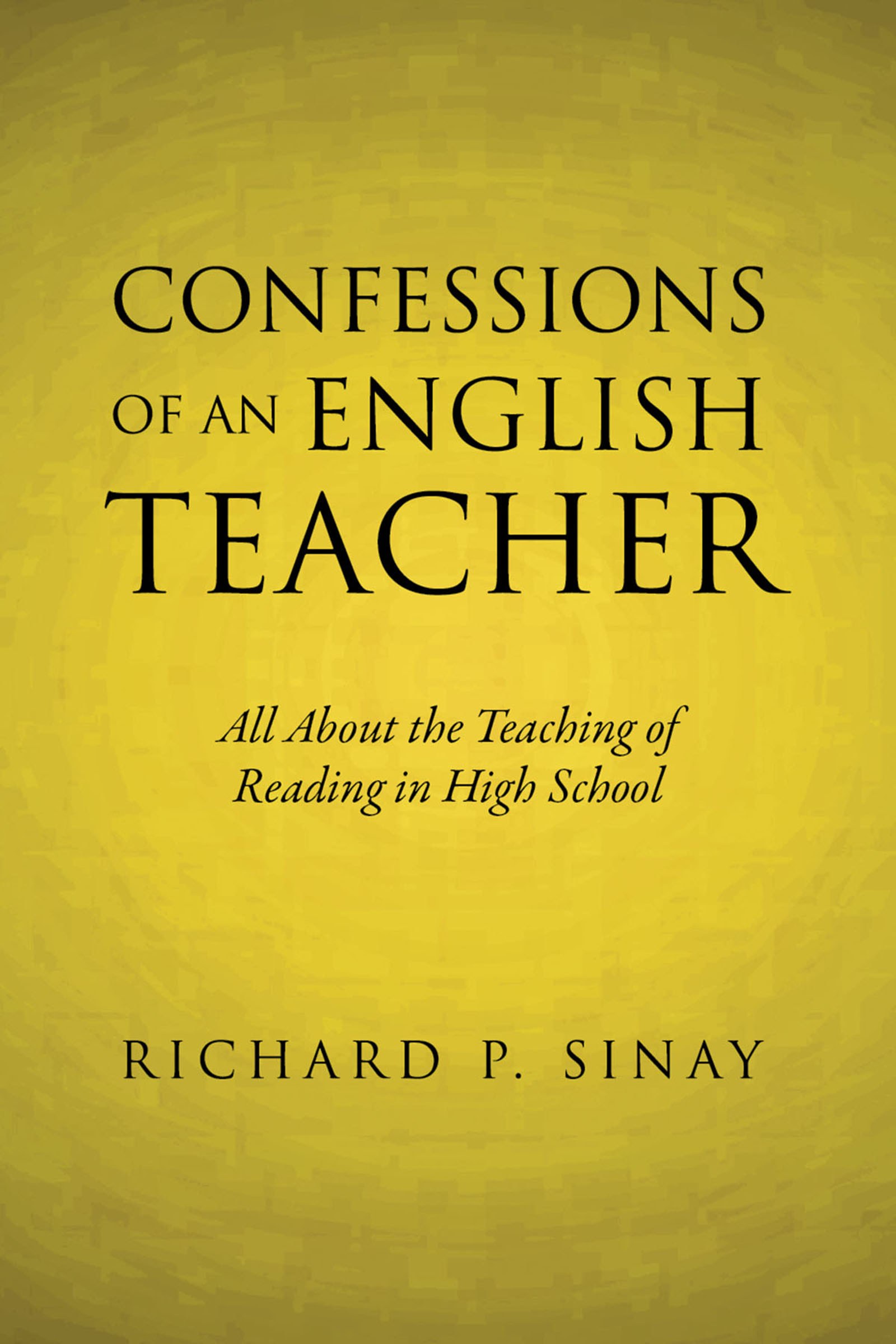
Richard P. Sinay, who taught English and reading in high school and college classrooms in Orange County, California, for 35 years, has released Confessions of an English Teacher: All About the Teaching of Reading in the High School. The 126-page Language Arts title is listed at https://www.amazon.com/Confessions-English-Teacher-Teaching-Reading/dp/196521620X. The book makes one central argument: English teachers should see themselves primarily as reading teachers, and the purpose of English instruction should be to produce students who read. Sinay contends that reading is the primary vehicle for literacy and that literacy cannot develop unless students read extensively. The book is written for classroom teachers and offers methods for encouraging reading as a lifelong habit rather than a course requirement.
The book arrives amid continuing public debate over how well American high schools develop literacy. Much of that debate centers on test scores, curriculum standards, and the texts assigned in English classes. Sinay approaches the problem from the classroom, drawing on three and a half decades of teaching. His premise is that the English curriculum often treats reading as one skill among many, competing for time with grammar, composition, and literary analysis. In his view, that ordering is backward. If students do not read in volume, he argues, the other language skills have little to build on. The book is aimed at the teachers who decide, day to day, what students read and how much of it they are asked to do.
The book's core claim is that the right reading, not simply more reading, drives literacy. Sinay argues that texts must be culturally and linguistically appropriate for the students who are asked to read them. A reading assignment whose language sits well beyond a student's current skill does not advance that student's language, he writes. It can instead consume the limited time available for literacy growth. Because literacy develops over time, he argues, instructional hours spent on texts that students cannot meaningfully read are hours lost. The book applies this principle to high school English, where classes often move whole groups through the same assigned works regardless of individual reading level.
Sinay frames reading growth as a ladder that needs nurturing, with each rung representing a level of reading skill and language familiarity. The teacher's job, in this model, is to help students climb it by matching texts to where students actually are, then moving them upward. The book describes ways to accomplish this and is organized around the goal of making reading a lifelong practice. It positions the English teacher as the person responsible for making that happen, not as a bystander to students' private reading habits. The emphasis throughout is practical: what teachers can change in their selection of texts, their use of class time, and their expectations for how much students read.
The book's distinguishing feature is the position it takes on the English teacher's job description. Many English teaching guides treat reading, writing, and literature as parallel responsibilities. Sinay's book makes reading the organizing priority and judges other activities by whether they help students become readers. It also ties the choice of reading material directly to language development, rather than to a fixed canon or a set of standards. That emphasis on fit between text and reader, combined with a long-term view of literacy as something built over years, sets the title apart from a standard methods text. The perspective comes from a practitioner who spent his career teaching English and reading, and it is presented as a personal confession of what he believes the profession should do differently.
"English teachers are reading teachers first. If students don't read extensively, literacy cannot develop, and the right reading is what makes extensive reading happen," said Richard P. Sinay, author of the book.
The primary audience is high school English teachers, particularly those who want to rethink how much class time goes to reading and which texts they assign. The book may also interest department heads and curriculum planners who select materials for English courses, as well as teacher educators who prepare new instructors. Sinay's focus on texts that match students' language skills is relevant to classrooms with a wide range of reading levels. Parents and community members concerned about student literacy may also find the argument useful, since it explains why the book holds that volume and appropriateness of reading matter more than any single assignment. Because Sinay taught at both high school and college levels, the perspective also extends to teachers who see the results of high school preparation.
Confessions of an English Teacher: All About the Teaching of Reading in the High School is available through Amazon at https://www.amazon.com/Confessions-English-Teacher-Teaching-Reading/dp/196521620X. The book is 126 pages and is categorized under Language Arts. Current pricing, available formats, and shipping details are listed on the product page. Readers who want to evaluate the book before purchasing can review the book description on the same page. No institutional licensing, bulk ordering, or classroom-set programs have been announced. Teachers and administrators interested in using the book in professional development or teacher preparation should check the product page for the most current purchasing options.
The reading title is part of a multi-book series Sinay has written under the Confessions of an English Teacher name. The series began with A Memoir of My Teaching Years, his first book about teaching English in California high schools and community colleges. It continued with How High School and Community Colleges Can Improve Instruction and How Textbooks Affect Literacy and What to Do About It. Companion volumes include All About the Teaching of Writing in the High School and The Problem and the Solution to Teaching Literature to Average Students. Together, the books address reading, writing, literature, textbooks, and institutional practice from the same classroom-based point of view, and each can be read on its own.
Sinay taught English and reading in Orange County, California, for 35 years, at both the high school and college levels. He now lives in Palm Desert, California, where he spends most of his time reading and writing. With the completion of his most recent teaching title, he has fourteen publications. His earlier work spans several subjects. Who We Met on the Way to Stanford: A Father's Memoir recounts pursuing a golf scholarship at Stanford with his son. How to Get a Golf Scholarship to Stanford: A Parent's Guide is aimed at parents of golfers. Observations of America and My Ancestral Past: An Epistolary Autobiography is a daily account of a twenty-five-thousand-mile trip around the country. Crazy Little Children Are Jangling the Keys of the Kingdom: The Estrangement Epidemic in America examines family estrangement.
About Richard P. Sinay
Richard P. Sinay is a retired English and reading teacher and the author of fourteen publications. He taught high school and college students in Orange County, California, for 35 years and lives in Palm Desert, California. His Confessions of an English Teacher series examines how reading, writing, literature, and textbooks are taught in high schools and community colleges. Confessions of an English Teacher: All About the Teaching of Reading in the High School is a 126-page Language Arts title that argues the goal of English instruction should be to encourage students to become lifelong readers. The book is available at https://www.amazon.com/Confessions-English-Teacher-Teaching-Reading/dp/196521620X.
