San Antonio, TX — 2026-07-18
Quentin P. Yarrow Releases Civic Foundations, a New Case for Public Schools as Democratic Institutions
153-page book argues public education sustains informed citizens and shared opportunity; available now as a $2.99 ebook
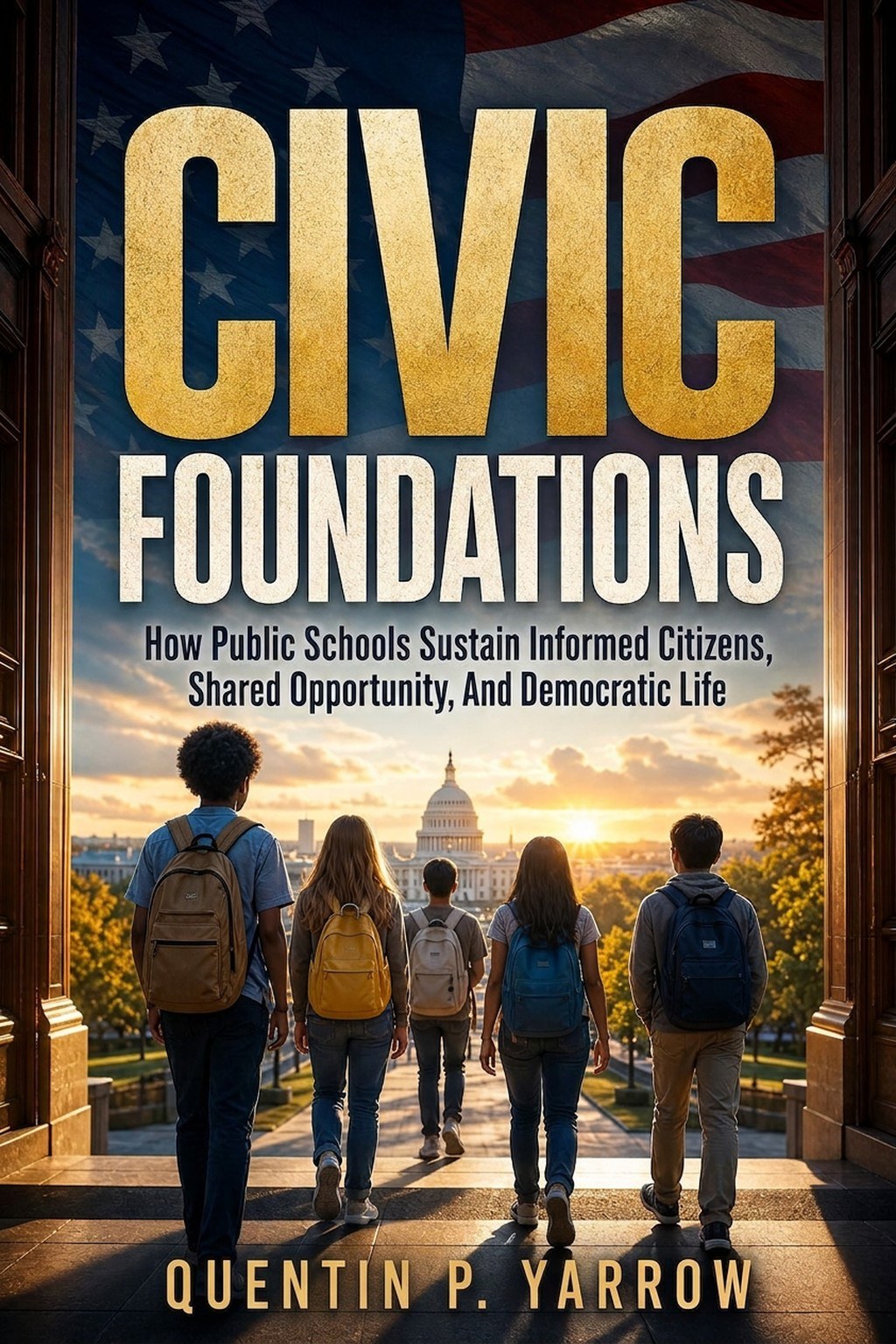
Author Quentin P. Yarrow has released "Civic Foundations: How Public Schools Sustain Informed Citizens, Shared Opportunity, and Democratic Life," a 153-page book arguing that public education functions as one of democracy's core institutions rather than simply a pathway to jobs or test scores. The ebook is available now through https://bookstore.ebookit.com/bookstore/civic-foundations/6d505e for $2.99, with EPUB and PDF formats included in the purchase. The book arrives at a moment when school funding, curriculum content, and public trust in education systems are active points of political and community debate across the country.
Civic Foundations is catalogued under Education / Philosophy, Theory & Social Aspects (EDU040000, ISBN 9781456684532), positioning it as a work of argument and analysis rather than a policy manual or classroom textbook. Yarrow's central claim is that public schools do work no other institution replicates: they gather children from different backgrounds into a shared civic space where disagreement is normalized and negotiated rather than avoided. The book contends that when that space weakens — through underfunding, neglect, or fragmentation — the effects extend past academic outcomes into the health of civic life itself, including public trust and the practical capacity of citizens to self-govern.
The book is organized around four claims about what public schools do beyond instruction: they create a common civic space where difference is normal, they support equal access and equal standing among students, they teach critical thinking and respectful disagreement as practiced skills, and they help build civic trust and public purpose at the community level. Yarrow develops each claim with the argument that these functions are not incidental to schooling but constitutive of it — meaning a school system that loses sight of them is failing at something more specific than test scores.
Written in what the publisher describes as an accessible, informal style, Civic Foundations avoids academic jargon in favor of direct argument aimed at readers without a background in education policy or political theory. Yarrow connects the civic promise of universal education — the idea that any child, regardless of background, has a claim to a real education — to broader questions of shared opportunity and equal standing under democracy. The book asks what is at stake when that promise is not kept, and argues that the answer extends well past individual students to the durability of democratic institutions generally.
The book's approach sets it apart from both technical education-policy literature and civics textbooks aimed at students. Rather than proposing specific funding formulas or curriculum standards, Yarrow makes a values-based case for why the institution of public schooling matters, aimed at readers who set policy, run schools, or vote on both. It sits alongside Yarrow's other titles — Common Ground Democracy, Press and Power, and Library of Democracy — as part of a broader project of accessible civic-education writing rather than a standalone academic argument.
"Democracy depends on more than voting — it depends on institutions that bring people together and prepare them to live with disagreement," said Quentin P. Yarrow, author of Civic Foundations.
Yarrow positions the book for four overlapping audiences: classroom teachers looking for language to explain the purpose of their work beyond test scores, school administrators and board members making resource decisions, policymakers weighing education funding and curriculum questions, and general readers who want a clearer framework for why public schools matter beyond their own household's enrollment. A teacher might use the book's argument about respectful disagreement to explain classroom practices to parents; a school board member might cite its equal-standing argument in a funding debate; a civically engaged reader might use it simply to sharpen their own thinking before a local election involving school board seats or bond measures.
Civic Foundations is available now as a direct digital purchase at https://bookstore.ebookit.com/bookstore/civic-foundations/6d505e, priced at $2.99 and including EPUB and PDF formats in a single purchase. After checkout, eBookIt emails secure download links directly to buyers, so readers can retrieve files without creating a bookstore account or waiting on shipping; download links remain active for 72 hours. No print edition or audiobook is listed for this title at this time.
Civic Foundations extends Yarrow's ongoing body of work on civic education, which includes Common Ground Democracy, Press and Power, and Library of Democracy. Taken together, the titles form a running argument that democratic self-governance depends on citizens who understand the institutions around them — schools, the press, the branches of government — well enough to participate in and defend them. Future titles are expected to continue examining specific democratic institutions in the same accessible, non-academic register, aimed at readers who want grounding in civics without wading through policy literature or dense political theory.
Civic Foundations by Quentin P. Yarrow is available now through eBookIt at https://bookstore.ebookit.com/bookstore/civic-foundations/6d505e. Yarrow writes accessible books on civic education, the Constitution, and the branches of government, aimed at equipping readers of all ages to participate more knowledgeably in public life. His other titles include Common Ground Democracy, Press and Power, and Library of Democracy. eBookIt serves as a direct-to-reader digital storefront for independent authors and publishers, delivering ebook and audiobook purchases via secure download links without requiring a separate account or physical shipping.