Portland, MAINE — 2026-07-18
Nora F. Mercer Publishes Worms in Motion, a Popular Science Look at Evolution
The 160-page ebook argues worm-like animals reveal the deep history of body plans, symmetry, and movement
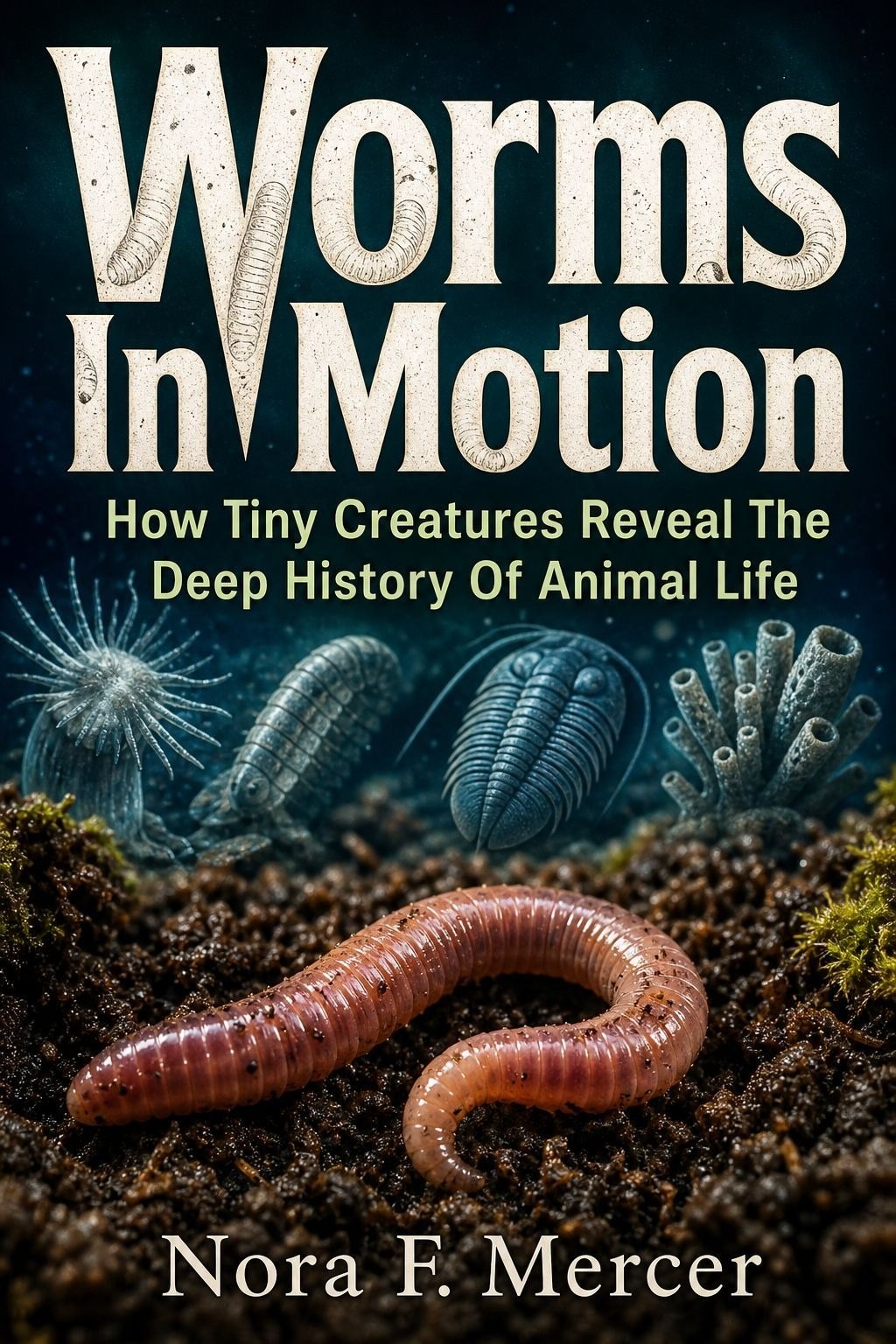
Nora F. Mercer has released "Worms in Motion: How Tiny Creatures Reveal the Deep History of Animal Life," a 160-page science title now available as an ebook through eBookIt at https://bookstore.ebookit.com/bookstore/worms-in-motion/773bcf. The book examines how worm-like bodies help scientists trace the origins of movement, body symmetry, and support structures in animal evolution. Priced at $2.99 and cataloged under Science / Life Sciences / Evolution (SCI027000, ISBN 9781456684600), the title is aimed at general readers, biology enthusiasts, and students looking for an accessible entry point into evolutionary biology. Rather than treating worms as a footnote in the animal kingdom, Mercer positions them as a central case study for understanding how complex life took shape.
Popular science publishing has increasingly turned toward small, specific organisms to explain large evolutionary questions, and worms occupy an unusual position in that conversation. They are common enough that most readers have encountered one, yet their biology spans an enormous range of unrelated animal groups, from earthworms to flatworms to marine polychaetes. That diversity has historically made worms difficult to teach as a single subject, and many general-audience science books skip past them in favor of more charismatic animals. "Worms in Motion" addresses that gap directly, using worm anatomy and movement as a lens for explaining broader concepts like bilateral symmetry, segmentation, and the evolutionary origins of muscles and nerves, concepts that also apply to more complex animals, including humans.
The book is structured around the idea that "worm" is a functional description rather than a precise scientific category, and Mercer uses that ambiguity as a teaching tool. Chapters walk through how different worm-like animals fit into the broader animal family tree, showing that creatures called worms are often only distantly related to one another despite sharing similar body forms. This comparative approach lets readers see convergent evolution in action, where separate lineages independently arrive at similar solutions for crawling, burrowing, and moving through soil or sediment.
A second thread running through the book focuses on movement itself as evidence. Mercer explains how the mechanics of crawling and burrowing require specific combinations of muscle arrangement, hydraulic skeletons, and nerve coordination, and how tracing these systems across worm species offers clues about how movement evolved in early animals more broadly. The book also covers body organization concepts such as segmentation and support structures, connecting them to the fossil record and to questions about what the earliest animals may have looked like. Written in plain language rather than technical jargon, the book is designed to be read without a prior background in biology.
Unlike textbooks that cover invertebrate biology as a broad survey, "Worms in Motion" narrows its focus specifically to worm-like body plans and uses that narrowness to build a clearer argument about evolutionary history. The book fits within Mercer's broader body of work examining overlooked animals, including prior titles on slugs, wasps, ants, and woodpeckers, each applying a similar close-focus approach to a single group or behavior. That consistency in method distinguishes the book from more general evolution titles that survey many taxa without dwelling on any one in depth.
"Worms are often the animals people overlook entirely, but their bodies hold some of the clearest evidence we have for how animal life took shape," said Nora F. Mercer, author of Worms in Motion.
The book is intended for readers who want a concrete, example-driven introduction to evolutionary biology rather than an abstract survey. General readers curious about natural history can use it as a standalone read, while biology students may find it useful as supplementary material for coursework covering invertebrate zoology or evolutionary theory. Educators looking for accessible material on body plans and animal diversity may also find chapters adaptable for classroom discussion. Naturalists and amateur field observers, a group Mercer writes for directly given her own background exploring forests, wetlands, and tide pools, are likely to find the book reframes familiar backyard animals as evidence of much older evolutionary processes, changing how a garden earthworm or tide pool worm is understood after reading.
"Worms in Motion" is available now as a direct ebook purchase from eBookIt at https://bookstore.ebookit.com/bookstore/worms-in-motion/773bcf, priced at $2.99. The listing includes EPUB and PDF formats, with all formats included in the purchase price. After checkout, eBookIt emails a secure download link, with access available for 72 hours, and no bookstore account is required to complete the purchase. Buyers can also apply a promo code at checkout if one is available. The book runs 160 pages and is cataloged for the Science / Life Sciences / Evolution category under ISBN 9781456684600.
The release adds to a growing catalog of nature-focused titles from Mercer, who has previously published books on subjects including slugs, wasps, ants, owls, and woodpeckers, each applying a close, species-specific lens to evolutionary and behavioral questions. Readers who buy "Worms in Motion" through eBookIt can find links to these related titles directly on the book's purchase page. Mercer's approach across these works remains consistent: take an animal often dismissed as minor or unremarkable and use its biology to explain a larger scientific idea, a pattern the author has indicated will continue in future titles covering other overlooked species.
Nora F. Mercer is a naturalist and science writer who spends her time exploring forests, beaches, wetlands, and meadows in search of overlooked stories in the natural world. She has a particular interest in earthworms, native bees, birds, and tide pools, and her books aim to show that even the smallest creatures have significant stories to tell. "Worms in Motion" is published and sold through eBookIt, an independent ebook and audiobook marketplace; the book's full listing, formats, and purchase details are available at https://bookstore.ebookit.com/bookstore/worms-in-motion/773bcf.