Los Angeles, CA — 2026-06-15
M.V. Black's The Pestilence Arrives as Anti-Novel on Authoritarianism and Colonial Memory
Literary fiction title deconstructs language and narrative form to explore power, truth, and psychological disintegration
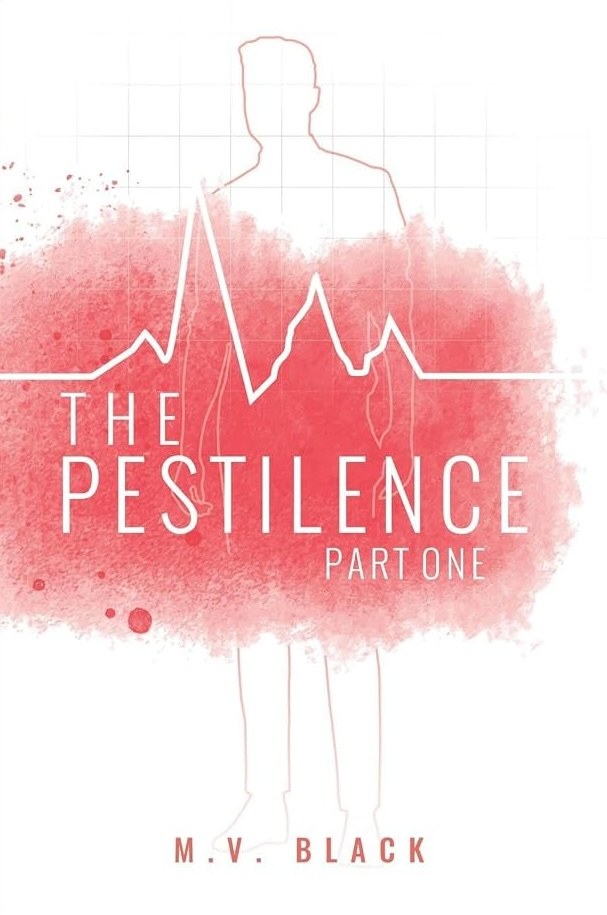
Author M.V. Black has released The Pestilence, a literary fiction title now available in ebook format at https://www.amazon.com/Pestilence-Part-M-V-Black-ebook/dp/B0CM7SL25G. Described by the author as an anti-novel, the book is set at the end of history and functions simultaneously as a cautionary tale about authoritarianism, totalitarianism, and autocracy, and as an examination of the lingering psychological and social effects of colonization. The release positions Black within a tradition of formally experimental fiction that uses narrative structure itself as a vehicle for political and philosophical argument.
The literary fiction market has seen sustained reader interest in works that engage directly with questions of political power and historical trauma, particularly those that move beyond realist convention to find forms adequate to their subject matter. The Pestilence enters that conversation by refusing the conventions of the traditional novel — linear plot, stable point of view, reliable narrator — in favor of a structure that mirrors its themes. The book is aimed at readers of serious literary fiction who are drawn to works that challenge the act of reading as part of their meaning-making, placing it alongside formally ambitious predecessors in the canon of politically engaged experimental prose.
At the center of The Pestilence is a man haunted by the memory of his dead wife, struggling to begin his day in a small, unnamed town. The novel immediately destabilizes its own premise: the man may himself be dead, may be the victim rather than the survivor, may be the murderer rather than the bereaved. The dead wife refuses erasure, pressing back against the living present, while the man attempts to suppress her memory, to keep her absent and forgotten. The town around him reflects his disintegration — his loss of control, his deteriorating grip on sanity — raising the question of whether the disorder is internal or external, personal or collective.
The novel's formal architecture is inseparable from its argument. Black deconstructs whole words into the smaller words embedded within them, then reassembles those fragments into new wholes. The technique is not ornamental; it enacts the book's central thesis about destruction as a precondition for emergence. The process of reading The Pestilence requires active participation in that breakdown and reconstruction, making the reader a witness to — and participant in — the very dynamic the novel describes. Themes of knowledge and power, the invention and denial of truth, and the play of opposites — yin and yang, feminine and masculine, speech and writing, light and dark — are worked through at the level of the sentence and the word, not only at the level of plot.
What distinguishes The Pestilence from other politically themed literary fiction is the precision with which its formal choices are mapped onto its thematic concerns. Many novels about authoritarianism or colonial legacy work within realist frameworks, relying on character and event to carry their critique. Black's approach treats the novel form itself as a site of the struggle it depicts — the contest between suppression and expression, between the forces that would keep things dead and the forces that insist on return. The anti-novel designation is not a marketing gesture but a structural commitment.
"The Pestilence is about what happens when power tries to erase what it fears — and why that erasure always fails," said M.V. Black, Author.
Readers who engage with The Pestilence will find the book most rewarding if they arrive with an interest in the intersections of political philosophy, postcolonial theory, and literary experimentation. The novel speaks directly to anyone grappling with contemporary questions about how authoritarian systems construct and destroy truth, how colonized peoples and histories resist enforced forgetting, and how individuals caught inside such systems experience psychological fragmentation. Book clubs focused on challenging fiction, university courses in postcolonial or experimental literature, and independent readers drawn to works by authors such as Samuel Beckett, Clarice Lispector, or Wilson Harris will find in The Pestilence a text that rewards close, recursive reading.
The Pestilence is available now as an ebook through Amazon at https://www.amazon.com/Pestilence-Part-M-V-Black-ebook/dp/B0CM7SL25G. Pricing is set at the standard ebook retail rate listed on the product page. The title is accessible on any device running the Kindle app, as well as on Kindle e-readers. Readers can sample the opening of the book before purchase using Amazon's standard preview function. No print edition availability has been announced at this time.
The Pestilence is identified on its product page as Part 1, indicating that Black intends the work as the opening installment of a larger project. The anti-novel framework and the thematic architecture — the confrontation of opposing forces, the destruction that precedes new form, the unresolved questions of victim and perpetrator — suggest a structure designed to accumulate across volumes rather than resolve within one. Readers who engage with the first installment are entering a work in progress, one whose full scope and argument will develop as subsequent parts appear.
M.V. Black is the author of The Pestilence, a work of literary fiction available at https://www.amazon.com/Pestilence-Part-M-V-Black-ebook/dp/B0CM7SL25G. Writing in the tradition of formally experimental, politically engaged fiction, Black uses the anti-novel as a vehicle for examining authoritarianism, colonial memory, and the psychology of power. The Pestilence is the first part of an ongoing project that treats narrative form as inseparable from political and philosophical content, positioning Black as a writer working at the intersection of literary innovation and urgent contemporary concerns about truth, erasure, and the dynamics of domination and resistance.
