Palm Desert, CA — 2026-11-07
Longtime California English Teacher Richard Sinay Releases Book on Textbooks and Literacy
The 154-page nonfiction title argues English teachers should build programs around students' language levels, not textbooks
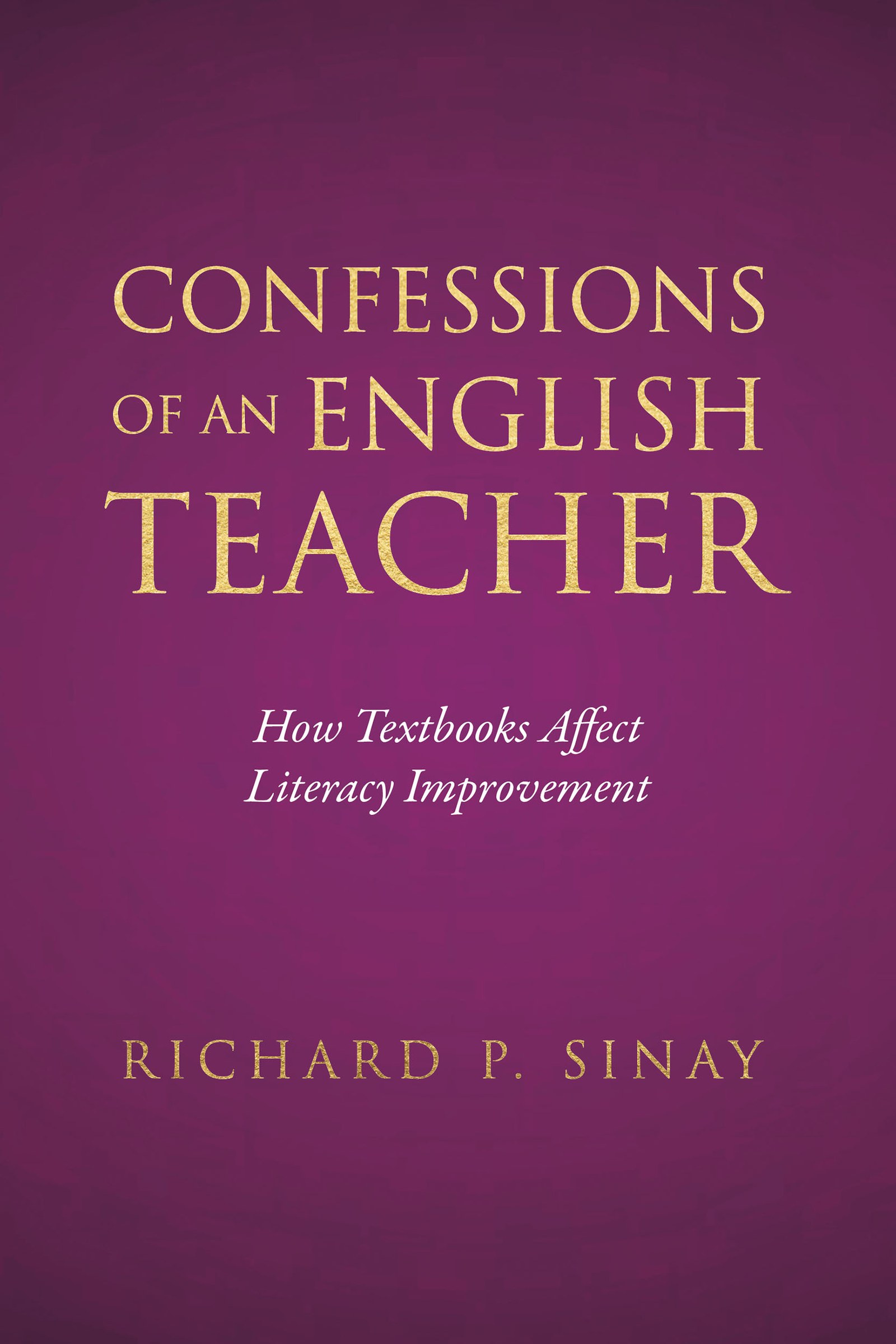
Richard Sinay, who taught English and reading in high schools and colleges in Orange County, California, for 35 years, has released Confessions of an English Teacher Book 3: How Textbooks Affect Literacy Improvement. The 154-page nonfiction book is listed at https://www.amazon.com/Confessions-English-Teacher-Textbooks-Improvement/dp/196521617X. It argues that the literature textbooks used in many average-level high school classes are ill-suited to most of the students who use them, and that this mismatch slows literacy development. Sinay proposes that English teachers replace textbook-driven instruction with custom-designed programs built around their students' actual language levels and cultural interests. The book is aimed at classroom teachers, department heads, curriculum planners, and parents who want to understand how reading materials shape what students learn.
The book enters a long-running debate over how schools teach reading and writing to students who are not in honors or advanced tracks. Sinay's central claim is that the standard literature anthology, a fixture of many secondary English classrooms, was not designed with average-level students in mind. In his view, the anthologies are out of step with those students linguistically, because the texts demand more than their reading proficiency can support, and culturally, because the selections often fail to reflect the world students live in. The result, he argues, is that class time goes to decoding material that does not engage readers, rather than to building the skills that raise literacy over time. The book is written from the perspective of a practitioner, drawing on decades in the classroom rather than on a formal research study.
At the center of the book is the argument that a custom-designed literature program would help students develop language skills more quickly than a textbook-based one. Sinay contends that teachers who know their students are better placed than textbook publishers to choose readings that match language level and interest. He calls on English teachers to design their programs around those two factors, treating the textbook as, at most, one resource among many. The book also describes how the textbook tends to dominate class time. When a single anthology sets the pace and content of a course, he argues, other critical components of literacy instruction go unaddressed. The book frames this as a structural problem in how courses are organized, not a failing of individual teachers.
A second line of argument concerns the balance between fiction and nonfiction. Sinay writes that literature has dominated the English curriculum for too long, and he recommends a foundation of both fiction and nonfiction in the reading students do. Integrating nonfiction, he argues, encourages students to read more texts that reflect the real world. He also links reading choices to writing instruction. If students are not reading only literature, he says, their writing will not have to focus so heavily on literary analysis, and teachers can assign writing that better prepares students for college. The book concludes with proposed solutions for customizing an English program for average students, giving teachers an alternative to the textbook-based curriculum rather than a critique alone.
Books on English instruction often focus on a single skill, a single policy, or a single reform. This one makes a narrower claim: that the physical and organizational center of many classrooms, the literature textbook, is itself a variable in student literacy. Sinay does not frame the problem as a lack of teacher effort or student motivation. He places the issue in the materials and in how they crowd out other work. His proposed remedy is also specific to a defined population, average-level students, rather than to all learners. The book pairs its critique with a practical direction for teachers who have latitude over their courses, and it places the responsibility for program design with the people who know the students best.
"A textbook is written for no one in particular, and an English class is full of particular students. Teachers who build around their students' language levels will see literacy improve faster," said Richard Sinay, author.
The book speaks most directly to high school English teachers who work with average-level students and have some freedom to choose or supplement course materials. For those teachers, it offers an argument for moving away from an anthology-first model and a framework for selecting readings by language level and cultural relevance. Department chairs and curriculum committees reviewing textbook adoptions may find its critique useful as a counterpoint. Teacher educators could use it to prompt discussion among prospective teachers about how materials shape instruction. Parents who wonder why their children are disengaged from school reading may also find an explanation in the book's account of language and cultural mismatch. Its call to mix fiction and nonfiction applies across grade levels in secondary schools.
Sinay writes from long experience. He taught English and reading at the high school and college levels in Orange County for 35 years, and the book's observations reflect that work in California classrooms. His earlier books on teaching include a memoir of his teaching years, a study of how high schools and community colleges can improve instruction, and volumes devoted to the teaching of writing, the teaching of reading, and the teaching of literature to average students. His writing outside education includes a memoir about pursuing a golf scholarship at Stanford with his son, a parent's guide to that process, an epistolary account of a 25,000-mile trip around the United States, and a book on family estrangement in America. He now lives in Palm Desert, California.
Confessions of an English Teacher Book 3: How Textbooks Affect Literacy Improvement is available through Amazon at https://www.amazon.com/Confessions-English-Teacher-Textbooks-Improvement/dp/196521617X. The listing identifies the work as a 154-page nonfiction title by Richard Sinay. Readers should consult the listing for current pricing, available formats, and shipping details, which can change. Educators and journalists interested in the book's arguments can use the same page to review the book description and author biography before purchasing. Interview requests and review inquiries can be directed to the author through the listing. No institutional discounts, classroom sets, or bulk purchasing programs have been announced.
The release adds to a body of work in which Sinay has returned repeatedly to the problems he saw in secondary English instruction. By his own count, he has fourteen publications, and a significant share of them carry the Confessions of an English Teacher title and examine a different aspect of how English is taught, from Common Core to writing, reading, and literature for average students. This latest book narrows the focus to textbooks and their effect on literacy. Together, the titles amount to an extended case, built from classroom experience, for teacher-designed programs matched to student needs. The author continues to read and write full time in Palm Desert, and the book list suggests he will keep examining how English is taught in American schools.
About Richard Sinay. Richard Sinay taught English and reading in high schools and colleges in Orange County, California, for 35 years. He is the author of fourteen publications, including memoir, parenting guidance, travel autobiography, social commentary, and a multi-volume Confessions of an English Teacher series on instruction in California high schools and community colleges. He lives in Palm Desert, California, where he reads and writes. Confessions of an English Teacher Book 3: How Textbooks Affect Literacy Improvement is available at https://www.amazon.com/Confessions-English-Teacher-Textbooks-Improvement/dp/196521617X.
