Seattle, Washington — 2026-11-01
Linda Soules Releases 'So You Want To Be An Astronaut,' an Unvarnished Career Guide for Readers Ages 10 to 14
The illustrated nonfiction guide covers astronaut training, microgravity and space careers, and joins a series of more than 60 titles
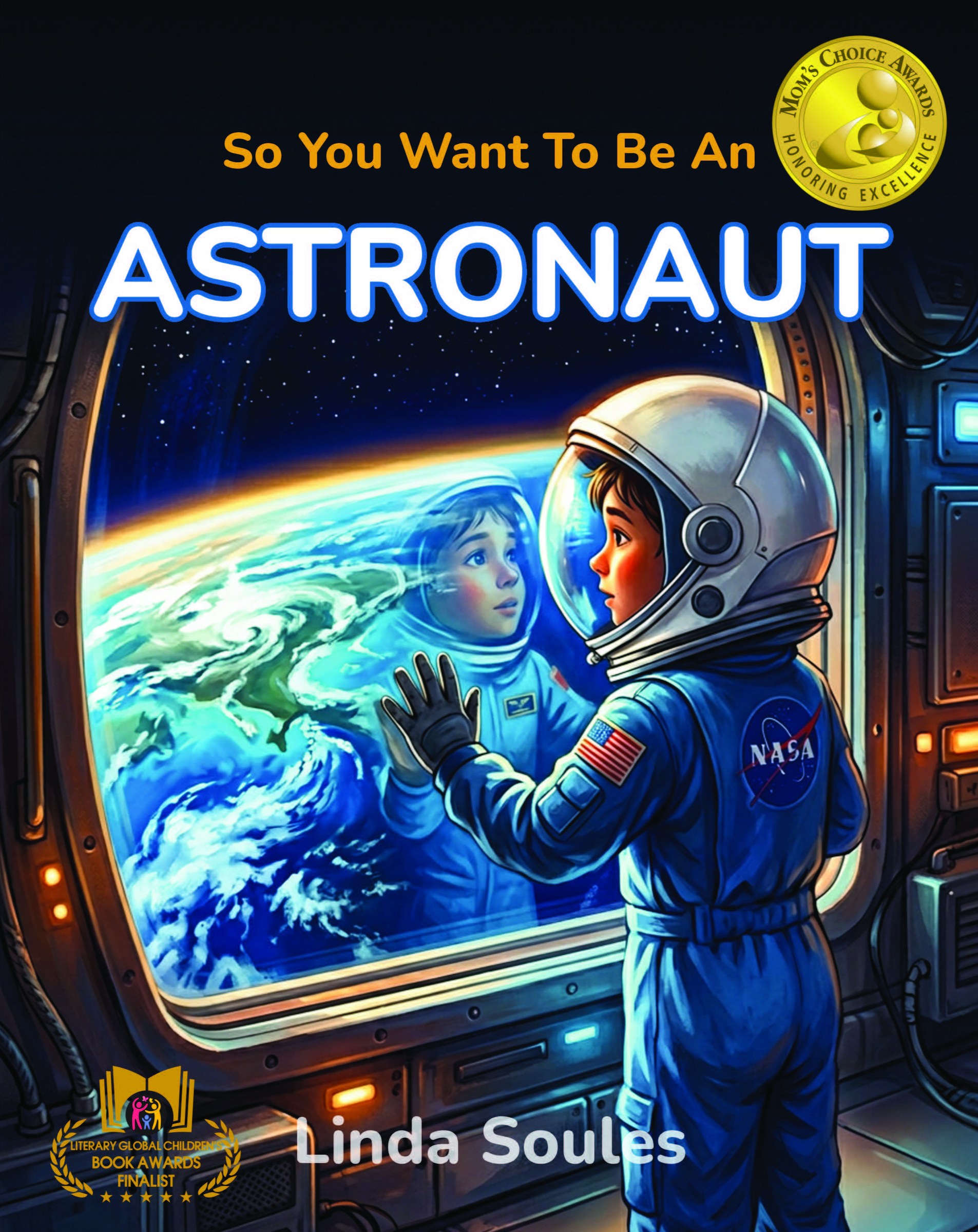
Author Linda Soules has released So You Want To Be An Astronaut, an illustrated children's nonfiction book that explains what it takes to become an astronaut, including the parts most career guides leave out. The book is aimed at readers ages 10 to 14 and is available through Amazon at https://www.amazon.com/dp/1972766015. It follows the full path from early preparation to launch, covering training, the science of spaceflight and the daily reality of living and working in orbit. Soules is the creator of the So You Want To Be A... series of career-exploration books, and this title extends that series into one of the most competitive professions in the world.
Children are often introduced to astronauts through films, posters and launch broadcasts. Those sources tend to show the liftoff and the view from orbit, but rarely the years of preparation, the technical coursework or the dependence on a small crew that no rescue team can reach. That gap leaves young readers with an incomplete picture of the job, and it can leave them without a sense of what to do next if the interest is real.
So You Want To Be An Astronaut is written for that audience. Its premise is that readers in the middle grades can handle accurate information about difficult careers. The book describes the work as it is, including what happens when a mission does not go as planned. It also connects the astronaut's job to the wider set of people who make spaceflight possible, so a reader who is curious about space but unsure about becoming an astronaut still finds a way in.
The first half of the book's approach is the path itself. Readers follow the years of preparation that come before a single mission, from underwater spacewalk simulations to wilderness survival training. The book treats training as a central part of the story rather than a montage before launch day. It describes how astronauts prepare for conditions that cannot be fully reproduced on Earth, and it explains why a crew's ability to work together matters as much as individual skill when help is, in the book's words, across distances no rescue team can cross.
The second half turns to the science. The book covers orbital mechanics, life-support systems and what happens to the human body during extended time in microgravity. It surveys the solar system and presents the science careers behind every mission, including engineers, flight surgeons, mission controllers and astronauts. A section on the history of space exploration profiles the pioneering figures who showed that people could survive and work in outer space. Glossaries define key terms without interrupting the pacing, and the final question the book poses is a practical one: what can a young reader start doing right now?
The book's format is built for repeat reading. Colorful images and short, focused sections break complex topics into pieces a reader can take in at one sitting or revisit by topic. The description frames it as part reference and part adventure, a companion a child might first pick up for its photographs at age eight and return to at twelve or fourteen to find more depth. That design lets the same volume serve a range of reading levels without splitting into separate editions.
Several features distinguish the book from typical space titles for young readers. It centers on the career rather than only on the cosmos, so the reader learns about selection, training and teamwork alongside planets and propulsion. It does not soften the difficult parts of the work. And it widens the definition of a space career beyond the astronaut's seat to include flight surgeons, mission controllers and engineers. Soules describes her approach across the series as never talking down to young readers, and the book applies that standard to subjects such as life support and orbital mechanics, which are often simplified to the point of being unhelpful.
"Kids are smarter and more curious than the publishing world often assumes. They deserve to hear what the job really involves, including the hard parts," said Linda Soules, author of the So You Want To Be A... series.
The book is written to work in several settings. Younger readers can explore it with a parent or teacher, using the short sections and images as prompts for conversation about science, ambition and what is possible. Independent readers in the middle grades can work through the material on their own, absorbing details and beginning to picture themselves in the role. Teachers and librarians building collections on science and careers may find it useful for units on space exploration. Older readers and adults are also part of the intended audience, with historical detail and insights that do not require a young reader's vocabulary to enjoy.
So You Want To Be An Astronaut is categorized as children's nonfiction and is available now on Amazon at https://www.amazon.com/dp/1972766015. The listing page includes the full book description and purchasing options. Readers who want to explore other careers can find additional titles in the So You Want To Be A... series through the author's catalog on the same platform. Pricing and available formats are listed on the product page and may change, so interested buyers should consult the listing directly for current details.
The astronaut book is one entry in a much larger project. The So You Want To Be A... series is envisioned to span more than 180 titles, with more than 60 published to date and new releases arriving on a steady cadence. Subjects range from astronauts and marine biologists to magicians, stunt performers and roller coaster designers. Each title follows the same template: pull back the curtain on a real career, describe its joys and challenges, lay out the path to get there, and leave readers with the sense that the world is wider and more reachable than they imagined.
Soules came to children's publishing after 25 years in law and finance, where she advised hedge funds and sophisticated financial institutions on legal and regulatory matters. She has said that work taught her precision and discipline, and how to translate intricate subjects into language anyone can use. She applies that approach to explaining technical material such as life-support systems and microgravity to readers who are 10 to 14 years old. Her working premise is that curiosity is the engine of a meaningful life, and that young readers are more capable than they are often given credit for.
About Linda Soules and the So You Want To Be A... series
Linda Soules is the author and creator of the So You Want To Be A... series, a growing collection of career-exploration books for readers ages 10 to 14 and beyond. The series is envisioned to span more than 180 titles, with more than 60 published to date. Before writing for young readers, Soules spent 25 years in law and finance. She lives in Seattle with her husband and two children. So You Want To Be An Astronaut is available at https://www.amazon.com/dp/1972766015.
