Seattle, Washington — 2026-11-02
Linda Soules Releases 'So You Want To Be A Pilot,' a 38-Page Aviation Guide for Ages 10 to 14
The children's nonfiction title covers aerodynamics, weather, instruments and career paths, and has won a Readers' Choice gold award
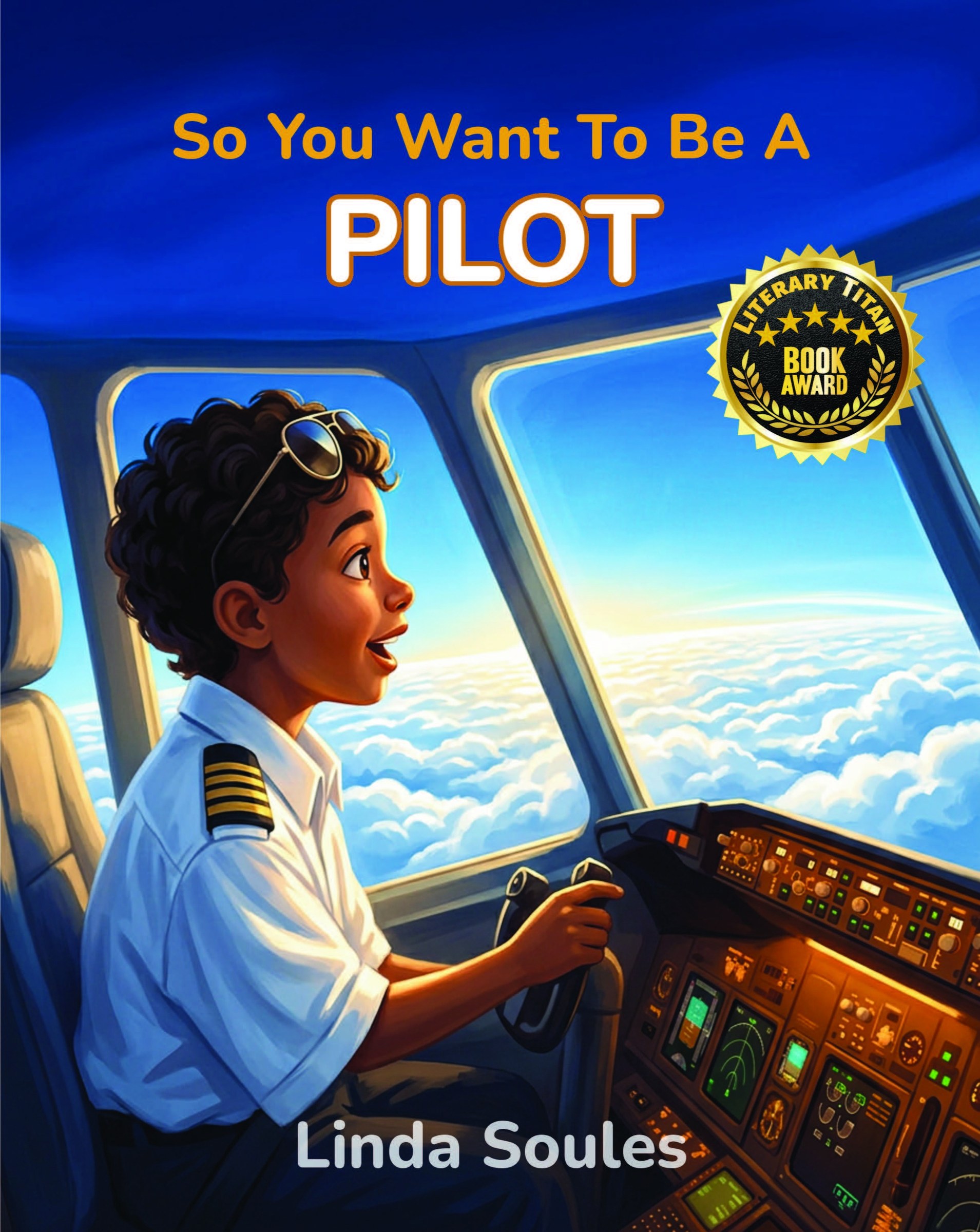
Author Linda Soules has released So You Want To Be A Pilot: A Kids' Guide to Aviation, Flight Training, Airplanes and Airports, and the Skilled Pilots Who Soar Through the Skies, a 38-page children's nonfiction book for readers ages 10 to 14. The book, listed at https://www.amazon.com/dp/1972766112, explains how aircraft fly, what pilots do and what it takes to reach the flight deck. It is the latest title in Soules's So You Want To Be A... career-exploration series. The book has won Gold in the Ages 8-12 category of the 2026 Readers' Choice Book Awards and the Literary Titan Gold Book Award. It is aimed at young readers who want technical answers rather than simplified summaries.
Children's books about aviation tend to fall into two groups: picture books that introduce airplanes to preschoolers, and general reference titles that treat flight as one topic among many. Readers in the middle grades, roughly ages 10 to 14, are often asking more specific questions. They want to know why a heavy aircraft stays aloft, how pilots handle dangerous weather and what separates an airline pilot from a bush pilot or a test pilot. They are also at an age when career interests begin to take shape, and when school science and math start to connect to real jobs.
That gap is where Soules has focused her series. Each book in the So You Want To Be A... line is built around a single profession and follows the same premise: young readers can handle real information. So You Want To Be A Pilot applies that approach to a field with steep technical and physical requirements. The book treats aviation as both a body of science and a long professional path, covering the first solo flight, years of training and logged hours, and the eventual move to a commercial flight deck.
The science sections come first. According to the book's description, readers explore the aerodynamics that allow roughly four hundred tons of aircraft to leave the ground. They also cover the meteorology pilots study so they can recognize dangerous weather before it arrives, and the navigation and instrument systems that let pilots fly when visibility drops to zero. The book is illustrated so readers can see how each system connects to the others. Soules presents these topics as the working foundations of aviation, not as stripped-down facts, and the goal is for a young reader to finish with a coherent picture of how an airplane is flown and not just a list of vocabulary words.
The second half turns to the profession. The book follows the arc of a pilot's career and explains why crew coordination on the flight deck is a precise system rather than a casual conversation. It describes the physical and mental demands of the job and the standards pilots must meet and maintain, flight after flight and year after year. It also widens the lens beyond commercial airlines to cargo flying, bush flying and test piloting, each with its own challenges and rewards. Stories of what pilots face in the air, from flights that go exactly to plan to those that call on every skill they have learned, are used to illustrate those careers.
The book closes with practical guidance for readers who want to start exploring aviation now. The suggestions include building model airplanes, studying weather patterns and asking questions about how things fly. The message is that the path to becoming a pilot begins well before a student touches the controls. That section gives parents, teachers and librarians a set of starting points for a young reader's interest, and it frames early curiosity as a legitimate first step in a career that requires years of preparation.
What distinguishes the title is its stance toward its audience. Soules's stated philosophy is never to talk down to kids, and the book describes itself as STEM nonfiction that is specific, illustrated and written for readers who want the real story rather than a watered-down version. It pairs technical subject matter with a career-focused structure, so a reader learns lift, weather and instrumentation alongside licensing, flight hours and crew procedures. It also places airline flying next to less familiar paths such as bush and test piloting, which many young readers have rarely encountered in a book written for their age group.
"Kids ask sharp questions about flight, and they deserve real answers. This book explains how flying works and what the job actually demands," said Linda Soules, author of the So You Want To Be A... series.
The book is written for curious readers ages 10 to 14 who have moved past basic airplane books. A student who builds model aircraft can use it to understand the aerodynamics behind what they are making. A young reader interested in weather can see how meteorology shapes a pilot's decisions. A family weighing STEM-related gifts can use it as an introduction to a career that draws on physics, geography, communication and discipline. Because it covers cargo, bush and test flying in addition to airline work, it may also appeal to readers who like aviation but are not sure the airline cockpit is the destination. Soules describes the series as written for readers "and beyond," so adults curious about the topic are welcome too.
Recognition for the book has come from several programs. In addition to the Readers' Choice Book Awards gold medal in the Ages 8-12 category and the Literary Titan Gold Book Award, the book's listing cites a Grand Prize at the 2026 Purple Dragonfly Book Awards and a Silver Award at the 2026 CIPA EVVY Book Awards in Children's Nonfiction, both attributed to the award-winning series. Award categories use different age brackets than the book's stated 10-to-14 audience, which reflects how competitions group middle-grade titles. For parents and educators choosing books, the awards offer independent signals alongside the book's own description of its content.
The book is available now through Amazon at https://www.amazon.com/dp/1972766112. It is a children's nonfiction title with 38 pages and the ISBN 978-1-972766-11-8. Current pricing, available formats and shipping options are listed on the Amazon product page, and readers can purchase directly from that page. Libraries, schools and booksellers can use the ISBN to locate and order the title. The book is described as a gift suited to young readers who feel drawn to aviation, and it can stand alone for readers who have not seen any other book in the series.
So You Want To Be A Pilot is one entry in a much larger plan. Soules has said the So You Want To Be A... series is envisioned to span more than 180 titles, with more than 60 published to date and new releases arriving on a steady cadence. Existing and planned subjects range from astronauts and marine biologists to magicians, stunt performers and roller coaster designers. Each book is meant to pull back the curtain on a real career, covering its joys, its challenges and the path to get there. For aviation, the pilot title offers a broad entry point, and the wider series lets readers compare very different professions side by side.
About Linda Soules and the So You Want To Be A... series: Linda Soules is the author and creator of the series, a growing collection of career-exploration books for readers ages 10 to 14 and beyond. The series is envisioned to include more than 180 titles, with more than 60 published to date. Her approach is to respect young readers' intelligence and curiosity, presenting each career honestly, including its demands and the route to entering it. So You Want To Be A Pilot is available at https://www.amazon.com/dp/1972766112.
