Fort Mohave, Arizona — 2026-10-07
Business Appraiser Toby Tatum Releases 'Turning Black Ink Into Gold' on Cash Flow Reporting
The 140-page toolkit argues small-business income statements should lead with cash flow, not just net profit for tax filing
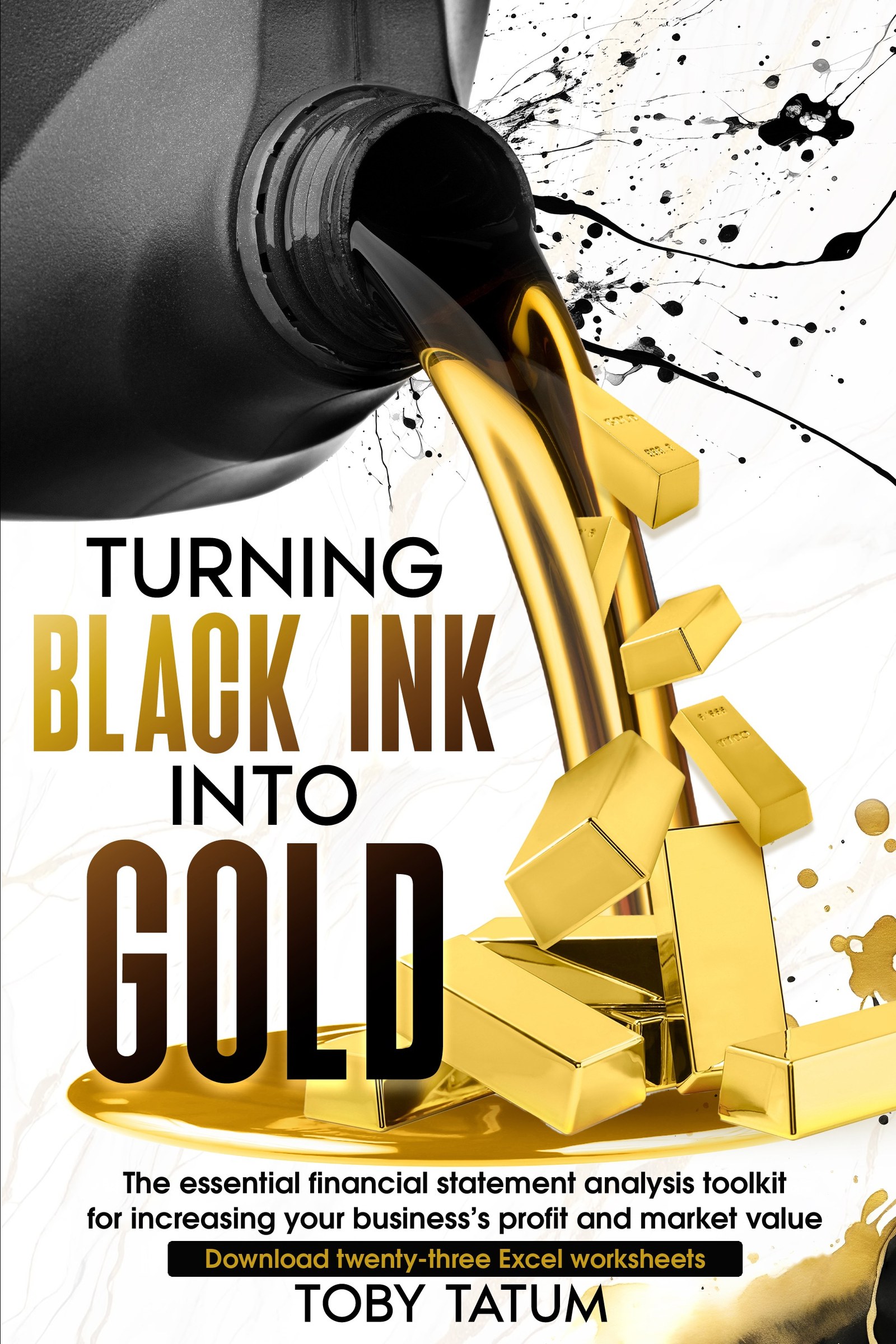
Toby Tatum, a Certified Business Appraiser and former restaurant operator, has released Turning Black Ink Into Gold: The essential financial statement analysis toolkit for increasing your business's profit and market value. The 140-page book is available in e-book format on Amazon at https://www.amazon.com/Turning-Black-Ink-Into-Gold-ebook/dp/B004TSIZ74. It is written for small business owners and the bookkeepers who prepare their financial reports. Its central argument is that the income statement should report a company's cash flow first, rather than serving mainly as a source for the net profit figure on an income tax return. Tatum contends that owners who adopt that view can improve both profitability and the price their business would command in a sale.
Many small companies produce financial statements for one reason: to give an accountant the numbers needed to file taxes. Tatum's book starts from the observation that this habit shapes everything downstream. Under a tax-first approach, the income statement's job is to arrive at net profit, and owners often judge their performance by that single line. Tatum calls the assumption misguided. Net profit depends on accounting choices, depreciation schedules and timing, and it can diverge sharply from the cash a business actually generates. For owners making decisions about hiring, pricing, borrowing or selling, he argues, reporting built around cash flow gives a more accurate picture of where the company stands and where it is heading.
The book grounds that position in two authorities. The first is Dr. Pablo Fernandez, whom the book's description identifies as one of the world's leading authorities on business valuation. Fernandez is quoted as saying, "There is a financial accounting maxim which, although it is not absolutely true, comes very close to it and which is a good thing to remember, net income is just an opinion, net cash flow is a fact." The second is Robert Trueblood, who led a group of accountants studying what users of financial statements need most. Their conclusion, as the book relates it, was both simple and clear: users need a handle on anticipated future cash flows. Tatum builds his framework on these two points.
As the subtitle indicates, the book is organized as a financial statement analysis toolkit rather than a theoretical treatise. Its stated purpose is to show small business owners how high-quality financial performance reporting can raise a company's profitability and its market value. The emphasis is on reading and restructuring the statements an owner already receives each month or quarter, so the figures answer operating questions instead of only satisfying a filing deadline. The book is categorized under Business & Economics / Bookkeeping (BUS005000), and its audience includes owners who handle their own books as well as the bookkeepers who support them.
The link between reporting and market value reflects the author's career on the transaction side of small business. Tatum has worked as a business broker and as a business appraiser, roles in which a buyer's willingness to pay depends on the cash flow a company can credibly demonstrate. In that setting, the quality of a seller's financial reports can influence how a business is priced and how readily a deal closes. The book carries that perspective back to owners who may not plan to sell for years. Its premise is that reporting practices adopted early shape both day-to-day management and eventual valuation.
Most bookkeeping titles aimed at small businesses focus on recording transactions, reconciling accounts and preparing for tax season. Turning Black Ink Into Gold takes a different starting point, treating financial reporting as a management and valuation tool. Its argument rests on the premise that a profitable-looking income statement, the "black ink" of the title, is not the same thing as a business that generates strong cash flow. Tatum also draws on valuation scholarship and accounting-standards research, an approach more common in appraisal literature than in guides for owners. The result is a short, 140-page book that addresses cash flow reporting directly.
"Most owners treat the income statement as a tax-return input. I wrote this book to show them it can be a decision tool that raises profit and market value," said Toby Tatum, author of Turning Black Ink Into Gold.
Tatum's background informs the book's practical orientation. He earned an MBA from San Francisco State University in the early 1970s and, immediately after graduating, bought a restaurant with his brother. The business began with eleven employees and, over the next twenty years, grew to six restaurants employing 275 people and serving about one million customers a year. He later moved into main-street business brokerage and earned the Certified Business Intermediary designation from the International Business Brokers Association. In 1999 he became a Certified Business Appraiser through the Institute of Business Appraisers, where he later served as Editor-in-Chief of its quarterly journal, Business Appraisal Practice.
The book is aimed first at owners of small, privately held companies who want to understand what their financial statements say about the health of the business. Restaurant, retail and service operators who review monthly statements with a bookkeeper are the clearest fit, given the author's own operating history. Bookkeepers can use it to reconsider how reports are structured and presented to clients. Business brokers, appraisers and advisors may also find it useful as a reference for explaining to owners why cash flow, not reported profit, drives how buyers and valuation professionals assess a company. Each of these readers faces the same problem: statements prepared mainly for tax purposes often leave important operating questions unanswered.
Concrete use cases follow from the book's thesis. An owner preparing to sell can examine how the company's statements will look to a prospective buyer and identify gaps before a listing. An owner seeking a loan can present clearer evidence of cash generation. An owner simply trying to run a tighter business can use cash flow reporting to see where money is going and which decisions are improving or eroding value. Tatum frames these benefits as consequences of better reporting rather than of any change in the underlying business, which is why he positions the book as a toolkit that owners can apply to the statements they already produce.
Turning Black Ink Into Gold is available now in e-book format through Amazon at https://www.amazon.com/Turning-Black-Ink-Into-Gold-ebook/dp/B004TSIZ74, where current pricing and format details are listed on the product page. The book's ISBN is 9781456601560 and its Amazon ASIN is B004TSIZ74. It runs 140 pages and is categorized as Business & Economics / Bookkeeping. Readers can use the Amazon preview feature, where offered, to sample the opening pages before purchasing. Tatum's earlier work, Pricing A Small Business for Sale: A Practical Guide for Business Owners, Business Brokers, Buyers and Their Advisors, is available separately at Valusource.com.
The new book extends a body of work Tatum has built over decades in business valuation and small-business transactions. His earlier title on pricing a business for sale was named Best Publication of the Year by the Institute of Business Appraisers in 2010. He has also published peer-reviewed articles in business appraisal journals, spoken at business appraiser conferences and presented webinars for appraisal associations. For many years he taught the pre-licensing course for Nevada's Business Broker Permit at the Key Real Estate School in Las Vegas. He is a member of the National Association of Certified Value Analysts, which in 2016 cited him as one of fifty-nine members described as Industry Titans.
About Turning Black Ink Into Gold: The book by Toby Tatum is a 140-page guide to financial statement analysis for small business owners, listed at https://www.amazon.com/Turning-Black-Ink-Into-Gold-ebook/dp/B004TSIZ74. It argues that the primary objective of the income statement should be to report cash flow and shows how high-quality financial performance reporting can improve a company's profitability and market value. Tatum holds an MBA from San Francisco State University, built a one-restaurant business into a six-restaurant company with 275 employees, and is a Certified Business Intermediary and Certified Business Appraiser. He is a former Editor-in-Chief of Business Appraisal Practice and author of Pricing A Small Business for Sale.
